




What Are The Different Types of Solar Panels Available?
Eco Providers
August 15, 2025

August 15, 2025
Making the switch to solar is an excellent way to harness renewable energy, reduce your electricity bills, and contribute to a more sustainable future. And thanks to the advancements in solar panel technology, homeowners across the UK now have more choices on what panels they can have than ever before.
But with so many options available, choosing the right solar panels can feel overwhelming. And did you know that not all panels are created equal? There are several different types of solar panels on the market, each with their own unique features and benefits.
In this blog, we’ll break down the different types of solar panels available, helping you understand which one might be the best fit for your home’s energy needs and budget.
How do solar panels work?
Put simply, solar panels work by converting sunlight into usable electricity. This process happens within the solar cells, which are the fundamental component of a solar panel. The most common type of photovoltaic (PV) cell is made from silicon, which is a semiconductor that can generate an electric current when exposed to light.
These silicon crystals are processed and arranged to form the panels you see on rooftops. When sunlight hits the solar panel, it creates a direct current (DC), which is then converted into an alternating current (AC) by an inverter to power electricity through your home.
6 main types of solar panels available
When exploring your options, you’ll find there are several different types of solar panels to choose from. Each panel has their own pros and cons when it comes to efficiency, appearance, and cost. Understanding the key differences between each panel is important for choosing the right one for your home. Let’s look at six of the most common panels in more detail.
Monocrystalline solar panels
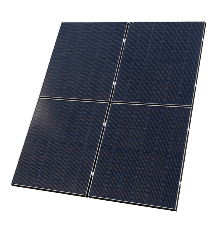
Monocrystalline panels are often seen as a premium choice for many properties, due to their higher efficiency and sleek black appearance. These panels are crafted from a single silicon crystal, which results in a superior efficiency rating of between 20-25%. This makes them an excellent choice if you have limited roof space and want to generate as much energy as possible.
Their advanced manufacturing process also contributes to a long lifespan, often exceeding 30 years, making them a durable and reliable investment. While the initial cost may be higher than other types, their performance and longevity often provide better long-term value. The look these solar panels offer also makes them a popular choice for those who value aesthetics.
Pros of monocrystalline solar panels:
- They offer the highest efficiency compared to other solar panel types
- They have a long lifespan and often come with warranties of up to 30-40 years
- They look sleek, modern, and subtle on rooftops
Cons of monocrystalline solar panels:
- They have a more expensive upfront cost than other options
Polycrystalline solar panels
Polycrystalline panels are easily recognisable by their distinctive blue colour and are made by melting multiple silicon crystals together. This manufacturing process is less wasteful than that of monocrystalline panels, which has made them a more budget-friendly option. However, it’s important to note that this leads to lower efficiency.
Because of their lower efficiency rating of 18-21%, you would need more panels to generate the same amount of power as a monocrystalline system – and this will require more roof space. As monocrystalline panels offer superior performance, polycrystalline panels are not the first choice offered by leading installers in the UK.
Pros of polycrystalline solar panels:
- They’re have a more eco-friendly manufacturing process
- They’re cheaper than monocrystalline panels
Cons of polycrystalline solar panels:
- They offer lower efficiency when compared to monocrystalline panels
- They’re not aesthetically pleasing
Thin film solar panels
Thin film solar panels are a different type of solar technology, as they’re made by placing multiple thin layers of PV material on top of each other. These materials often include cadmium telluride, amorphous silicon, and copper indium gallium selenide. This is what makes these solar panels extremely lightweight and flexible.
Their main advantage is their versatility. Thin film panels are ideal for unusual or unconventional surfaces, such as curved roofs, caravans and motorhomes, or properties with limited roof space where heavy panels are not suitable. However, this flexibility comes at the cost of performance, as they offer a much lower efficiency rating of 7-13% and shorter lifespan compared to other panel types.
Pros of thin film solar panels:
- They’re lightweight and flexible
- They’re suitable for uneven surfaces
- They’re cheaper than other solar panel types
Cons of thin film solar panels:
- They offer significantly lower efficiency
- They have a lower lifespan, typically up to 10-20 years
- They’re not as readily available as other solar panel
Perovskite solar panels
Perovskite panels are at the forefront of solar technology innovation. These panels use a synthetic material with a specific crystal structure, layered on top of traditional silicon to create a ‘tandem’ cell. This combination allows the panel to capture a wider spectrum of light between each layer.
This has resulted in record-breaking efficiency ratings of 29-31% during testing, and in some cases, even surpasses the best monocrystalline panels. Although perovskite solar technology is incredibly promising, it’s only available to specific applications through specialised companies, meaning they’re not widely commercially available for homeowners yet.
Pros of perovskite solar panels:
- They have the highest efficiency rating than other solar panel types
- They have the ability to significantly reduce electricity bills than other solar panel types
- They have an aesthetically pleasing look, similar to monocrystalline panels
Cons of perovskite solar panels:
- They’re currently only available for specific applications
- They’re more than likely going to have a higher upfront cost
Solar tiles
For anyone worried about the aesthetics of traditional panels, solar tiles offer a sleek alternative as they blend in with standard roof tiles. They’re designed to function as both a protective roof covering and a generator of electricity. They’re manufactured by integrating monocrystalline solar cells into a conventional tile design, giving them their modern look.
While solar roof tiles are an excellent solution for maintaining your home’s appearance – especially for homes in conservation areas – they can come with significant drawbacks. They’re substantially more expensive to install than modern solar panels and offer a mediocre efficiency of 10-20%. The installation process is also more complex, as it involves replacing your entire roof.
Pros of solar tiles:
- They’re extremely aesthetically pleasing
- They’re more durable than traditional solar panels
- They often avoid regulations on listed buildings and conversation areas
Cons of solar tiles:
- They can be extremely expensive
- They offer lower efficiency than standard solar panels
- They have a longer and more complex installation process
Solar thermal panels
Solar thermal panels are often mistaken for PV panels, which are designed to generate electricity, however, solar thermal panels use solar energy to heat water for your home. They work by circulating a fluid through tubes that absorb the sun’s heat, which is then transferred to your hot water tank.
These systems are highly efficient at their specific job, which is heating water. They can significantly reduce your heating bills by providing a large portion of your household’s hot water needs. However, they don’t contribute to your home’s electricity production and therefore can’t be used to power your home. They’re often used alongside a solar PV system for an all encompassing renewable energy solution.
Pros of solar thermal panels:
- They’re very efficient at heating water
- They can significantly reduce your heating bills
- They’re often cheap to buy
Cons of solar thermal panels:
- They don’t generate electricity for your home
- They can’t provide 100% of your hot water, only a large portion
Which type of solar panel is right for me?
Choosing the best type of solar panel depends on your specific circumstances and priorities. There isn’t a single “one-size-fits-all” answer and the decision will involve balancing your budget with the performance of your chosen panels, and other factors.
Some key factors to keep in mind when choosing the right solar panel type include:
- Your budget – consider the upfront cost of your chosen solar panels and the long-term return of investment they offer.
- Your available roof space – this will determine how many solar panels you can install, which will directly affect the amount of power you’ll be able to generate for your home.
- The amount of energy you consume – your household’s annual energy needs will determine the system size you’ll need to meet your energy needs.
- Panel performance – if you consume a lot of energy, you’ll want to opt for solar panels that offer maximum efficiency to meet your needs.
- The local climate – while the UK isn’t known for its warm, sunny weather, your local climate will play a role in the performance of your chosen panels.
Get a solar quote today
Understanding the different types of solar panels available is the first step to switching to solar energy. The next step is to get a tailored quote. At Eco Providers, we can assess your property, discuss your energy needs, and recommend the best solar PV system for your home. We’ll provide you with a detailed breakdown of costs, including professional installation, and an estimate of your potential savings on your electricity bills.
To get a quote, or to find out more information, don’t hesitate to contact our experts today and start your journey towards generating clean, renewable energy right from your own rooftop.
FAQs about solar panels
Monocrystalline solar panels are the most efficient type currently available on the market. Their single-crystal silicon structure allows for higher efficiency, making them ideal for maximising energy generation, especially when roof space is limited.
Generally, the cost of solar panels reflects their efficiency. For example, monocrystalline panels have the highest upfront cost due to their complex manufacturing process and high efficiency ratings. Polycrystalline panels are traditionally cheaper, while thin film solar panels are often the least expensive but are also the least efficient option.
Most high-quality solar panel systems are built to last. The main types of solar panels, like monocrystalline, typically have a lifespan of up to 30-40 years. Many efficient solar panels come with a performance warranty guaranteeing a certain level of output for 25 years or more.