


Solar & battery · Case study
In-roof solar and Tesla Powerwall 3 installation in Cumbria
Solar that fits the roof. Energy stored for later.
Twelve LONGi 480W in-roof panels paired with Tesla Powerwall 3 and an expansion battery: 5.76kWp of solar and 27kWh of storage for a home in Cumbria, North West, UK.
- Site-specific design
- Professional installation
- Support through handover

Award-winning expertise.From your first questions to installation and aftercare.
The homeowner’s brief
Why the homeowner chose in-roof solar
The homeowner wanted solar panels integrated into the roof for their appearance and to reduce the amount of conventional roof covering needed across the array area. They also wanted to consider future roofing requirements if work became necessary.
With electricity use of around 30kWh a day, the homeowner wanted substantial battery storage and greater resilience during a power cut. The system pairs an in-roof solar array with a Powerwall 3 and expansion battery, providing 27kWh of total storage.
Power-cut protection depends on the installed backup configuration and connected circuits. How long stored energy lasts depends on the battery charge, reserve settings and appliances in use.
The roof integration
Integrating the panels into the slate roof
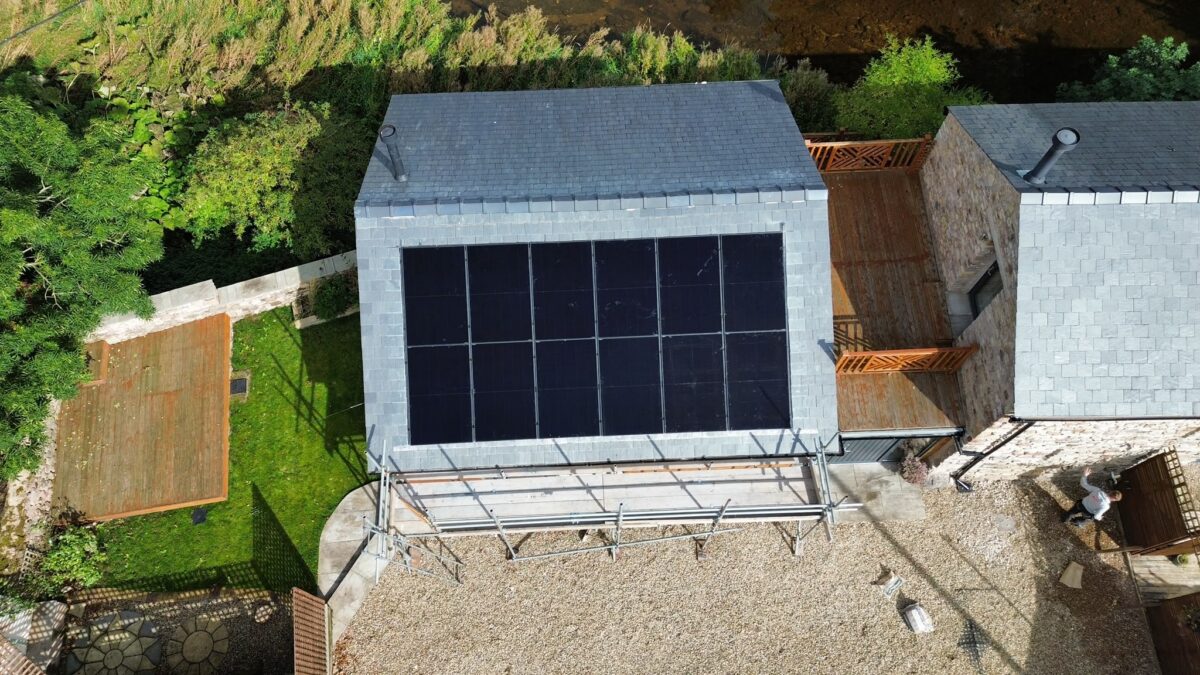
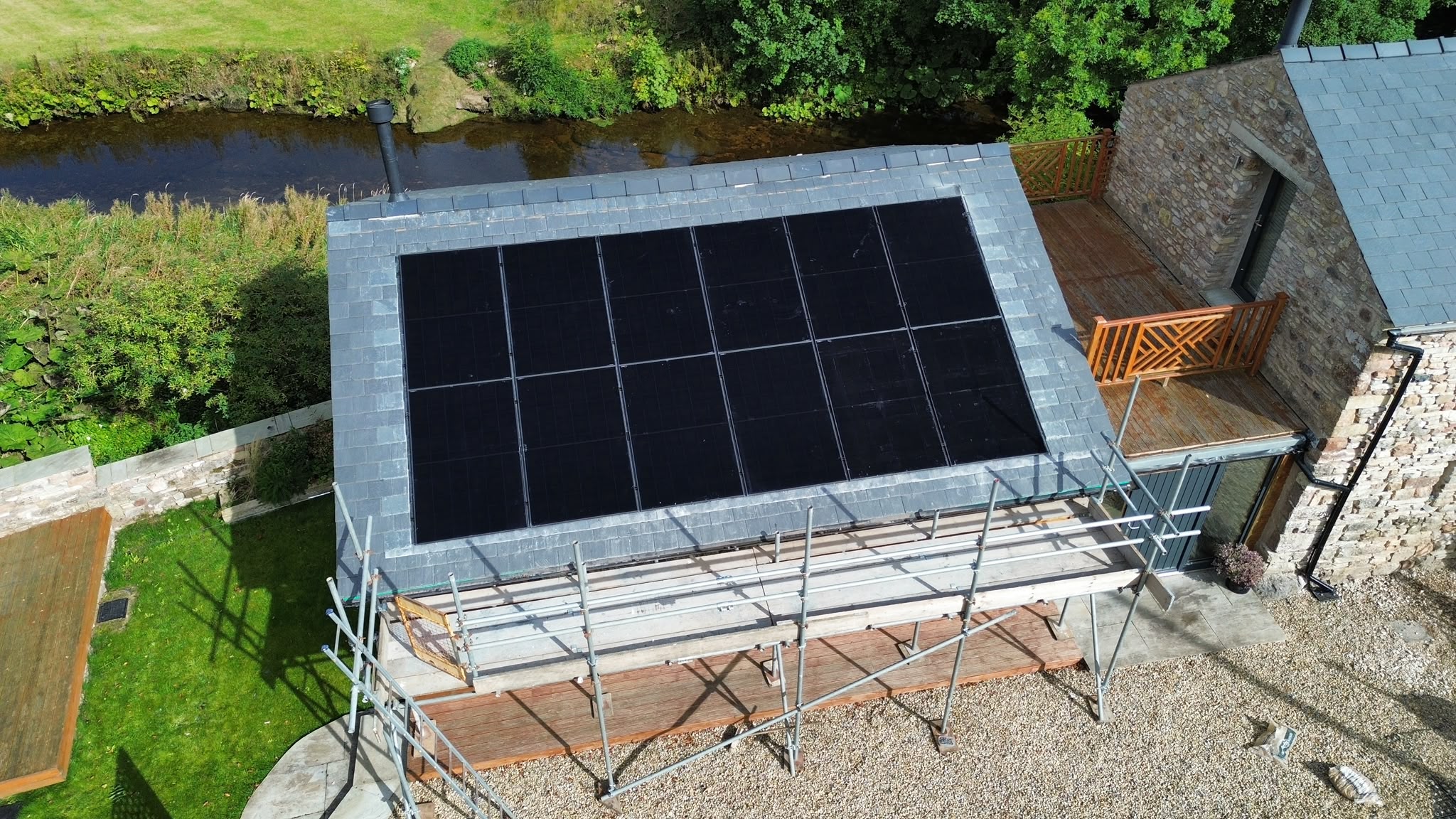
The array is integrated into the roof covering, with slate surrounding the panels. This gives the installation a continuous roofline rather than positioning the panels above the tiles.
The close-up photograph shows the junction between the array and the surrounding slate. Together with the wider views below, it documents how the panels fit into this roof.
For a similar project, the mounting approach depends on the roof construction, condition and available space, assessed during the survey.
Solar and battery storage
Why this home needed 27kWh of storage
The home uses around 30kWh of electricity a day. The homeowner chose 27kWh of storage to hold energy for later use and support their aim of greater power-cut resilience, subject to the installed backup configuration. Solar generation can supply the property during the day. When it exceeds immediate demand, surplus electricity can charge the Powerwall for use later, subject to available capacity and system settings.
What this means for the property
Stored electricity can help meet demand when solar output falls, reducing grid purchases at those times. The benefit depends on when electricity is generated and used, as well as the tariff and system settings.
Generation and savings vary by property and season. The figures below are proposal estimates, rather than measured operating results.
Explore how battery storage works →Projected performance
Estimated generation and savings
The OpenSolar proposal models how the solar array and battery could contribute to the home’s electricity needs.
4,031 kWh
Estimated electricity generated by the solar panels each year.
37%
Estimated share of annual electricity demand met by solar, with battery storage.
£753
Estimated annual energy bill savings shown in the proposal.
How these estimates were calculated
The proposal assumes annual electricity use of 11,000kWh, approximately 30kWh per day, with a south-facing array at a 30° roof pitch and a shading factor of 0.804. It uses the MCS output calculation method.
The financial model uses the Intelligent Octopus Flux North Western tariff labelled April 2026 in the proposal. These are historical modelling assumptions, not a current tariff offer. Its longer-term projections assume energy costs increase by 7% each year.
Figures are estimates, not guaranteed performance or measured savings. Actual results depend on weather, shading, electricity use, tariff rates and system settings. Backup reserve settings can also affect the capacity available for everyday use.
Installation gallery
Installation photographs
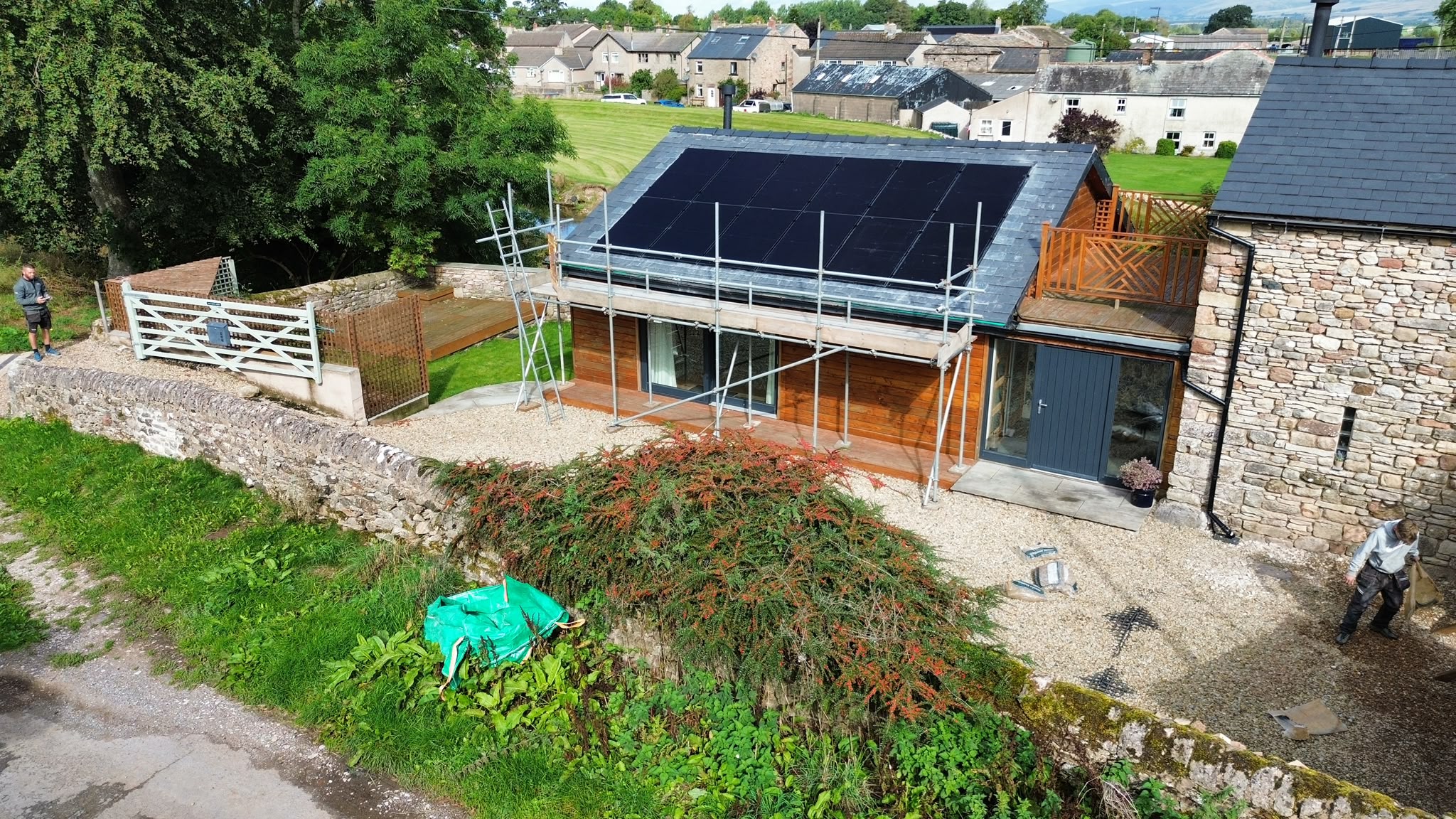
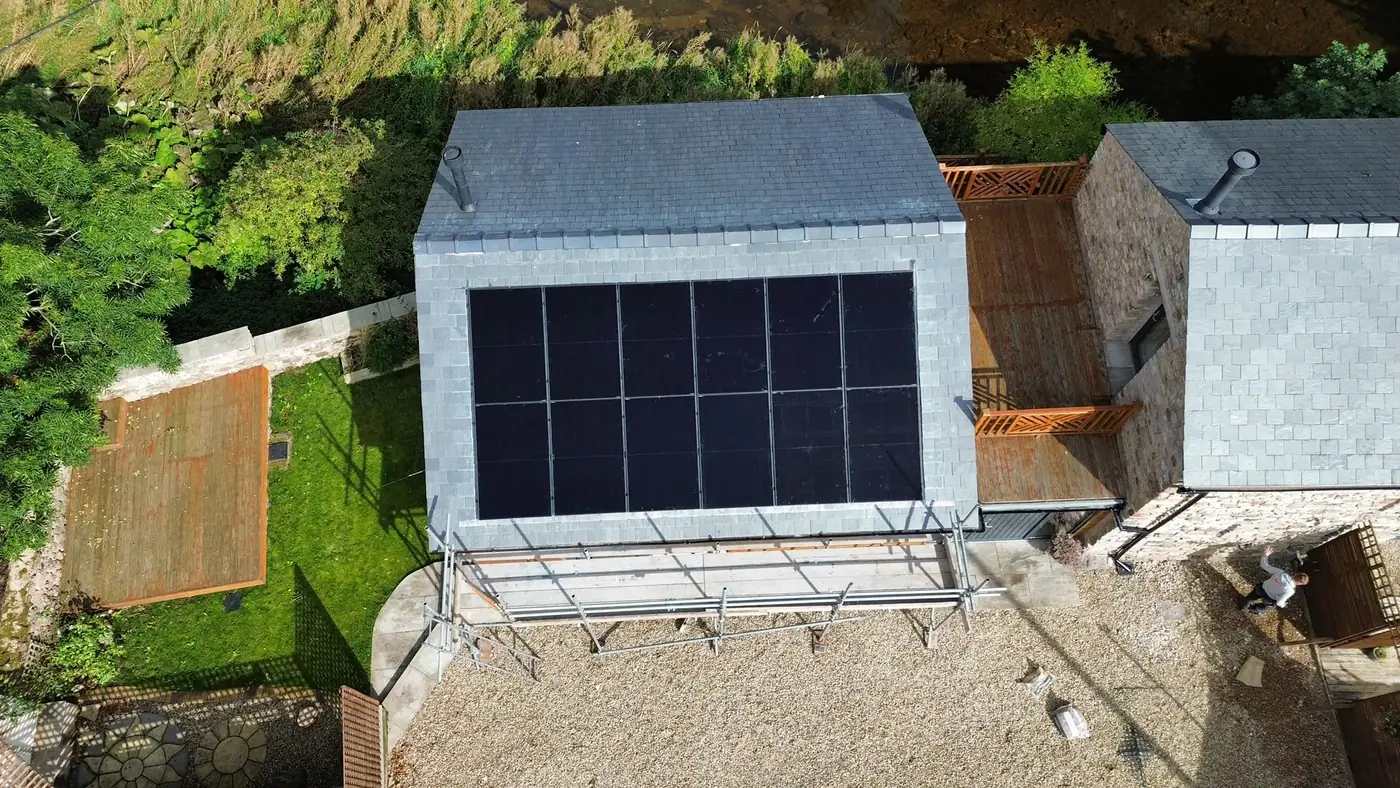
Original photography showing the property, the in-roof array and the surrounding slate finish. These images were taken while scaffolding was still in place.
Explore your options
Planning solar and storage for your home?
Explore the options below, or contact our team to discuss your roof, electricity use and what you want to achieve.