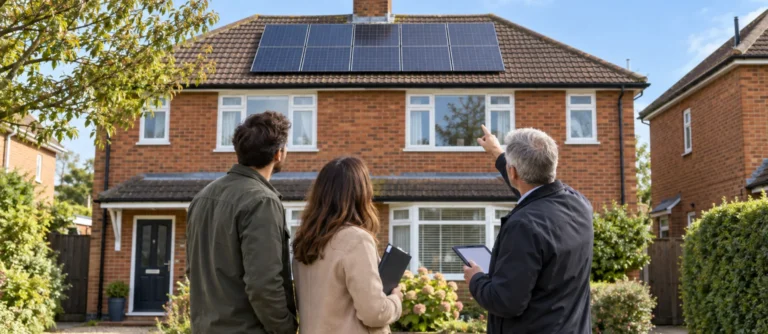


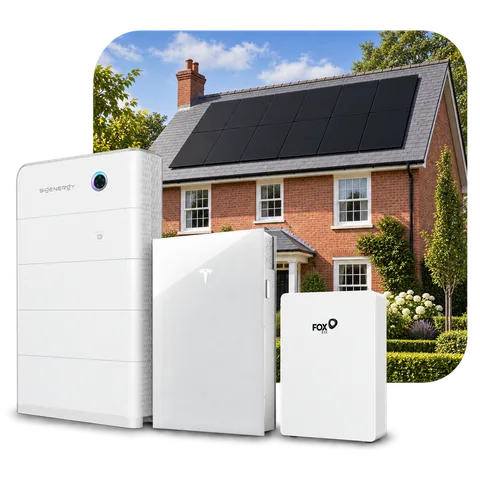
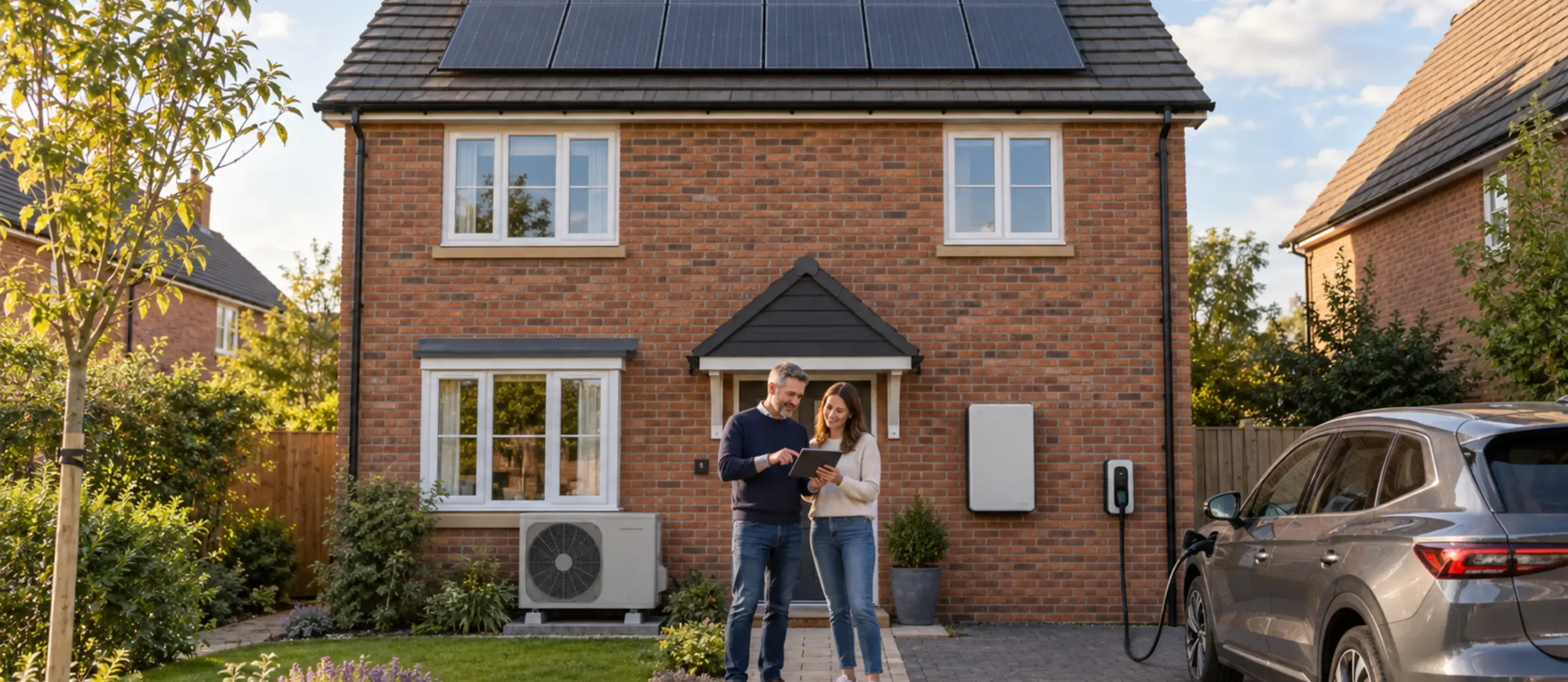
AI-generated illustrative image: Homeowners reviewing energy savings outside a house with solar panels. It does not depict a real Eco Providers customer or property.
Solar panels can reduce the amount of electricity a household buys from the grid, but whether they are “worth it” depends on the property, electricity use, system price and export arrangement. This guide explains how to estimate payback without relying on an unrealistic headline figure.
Guide status: Updated for 2026
Quick answer: Solar panels can reduce electricity bills, but there is no single payback period that applies to every home. The worked example below gives a simple payback of about 10.1 years using clearly stated illustrative assumptions. Your own result will depend on the installation cost, roof, household electricity use, import and export tariffs, and ongoing costs.
Author: William Meadows, Eco Providers | Expert contribution: Ian Cartledge, Head of Net Zero | Last reviewed: 14 October 2026

Solar payback at a glance
- Start with a credible annual generation forecast.
- Value self-used and exported electricity separately.
- Use realistic daytime consumption assumptions.
- Include degradation and inverter replacement risk.
- Compare cash purchase and finance on the same basis.
- Review the calculation when tariffs change.
Are solar panels worth it for a UK homeowner?
Solar can be a strong long-term investment when a roof has a suitable orientation, limited shading and enough usable area, and when a meaningful share of generation can be used in the home. The financial case becomes weaker where the installation price is unusually high, the array is heavily shaded or the homeowner expects to move before the benefits have accumulated.
Value is not purely financial. Some households also prioritise lower exposure to future electricity prices, reduced carbon emissions and the ability to support an EV charger, battery or heat pump with home-generated electricity.
How is solar-panel payback calculated?
Simple payback divides the net upfront cost by the expected annual financial benefit. The annual benefit has two parts: imported electricity avoided because solar is used in the home, and payments received for electricity exported to the grid.
The payback formula
Annual benefit = value of self-consumed electricity + export income - ongoing costs.
Simple payback = net installation cost ÷ annual benefit.
This is a useful first check, but a robust assessment also considers panel degradation, inverter life, maintenance, tariff changes and the time value of money. Where finance is used, compare the total amount repayable - not only the monthly payment - with the expected savings.
What determines annual solar savings?
| Factor | Effect on the result |
|---|---|
| System generation | Driven by array size, orientation, pitch, shading, location and equipment |
| Self-consumption | Each solar unit used on site avoids buying a unit from the grid |
| Export tariff | Surplus electricity may earn a Smart Export Guarantee payment |
| Import tariff | Higher import prices increase the value of electricity used directly |
| Usage timing | Daytime loads generally improve self-consumption |
| System price | Affects how much value must be recovered before break-even |
Generation forecast
An installer should provide an estimate based on the property rather than using a national average alone. Ask for the assumptions behind the forecast, including shading and system losses, and retain the document with the quotation.
Self-consumption
Solar electricity is usually most valuable when it directly replaces imported power. Appliances, hot-water controls, EV charging and battery schedules can sometimes be shifted into solar-generating hours, but the model should reflect how the household actually lives.
Export income
In England, Scotland and Wales, the Smart Export Guarantee (SEG) requires participating suppliers to offer eligible small-scale generators payment for exported electricity. SEG does not apply in Northern Ireland; households there should check available export arrangements directly with their electricity supplier. Rates and conditions vary. Check the current Ofgem SEG supplier information and confirm metering and certification requirements.
A simple worked example
Suppose a solar-only system costs £6,100 in total and is forecast to generate 3,500 kWh of usable electricity in its first year, after the installer’s system-loss assumptions. If 45% is used in the home, 1,575 kWh replaces imported electricity and 1,925 kWh is exported. No battery is included.
For this illustration only, assume an import unit rate of 27p/kWh, an export rate of 12p/kWh and a £50 annual allowance for ongoing costs. These are calculation inputs, not a current tariff offer, an installation quotation or an estimate of every household’s maintenance costs. Replace them with the figures relevant to your home.
| Input | Example | Replace with |
|---|---|---|
| Installed cost | £6,100 | Your final quotation |
| Annual generation | 3,500 kWh | Installer’s property-specific forecast |
| Self-consumption | 45% | Your daytime-demand estimate |
| Import value | 27p/kWh (illustrative) | Your current import unit rate |
| Export value | 12p/kWh (illustrative) | Your eligible export tariff |
| Annual ongoing costs | £50 (illustrative allowance) | Your expected ongoing costs |
The result using these assumptions
- Electricity bill saving: 1,575 kWh × £0.27 = £425.25 a year.
- Export income: 1,925 kWh × £0.12 = £231.00 a year.
- Annual benefit after the cost allowance: £425.25 + £231.00 - £50.00 = £606.25.
- Simple payback: £6,100 ÷ £606.25 = about 10.1 years.
This simple calculation holds first-year generation, usage and tariffs constant. It does not model panel degradation, finance charges, a separate inverter replacement cost or the time value of money. The £50 allowance is not a guarantee that future costs are covered. Standing charges remain payable and are not counted as a saving. A detailed lifetime assessment may produce a different break-even date.
The Energy Saving Trust publishes regularly updated examples using its own assumptions. Checked on 14 October 2026, its guide shows payback periods of 9 to 12 years across its London, Manchester, Aberystwyth and Stirling examples, including export payments and using July 2026 fuel prices. Northern Ireland payback figures are awaiting its next update. These are illustrative scenarios, not a guaranteed range for every home. See the Energy Saving Trust solar-panel guide.
How to improve solar-panel payback
Use more generation at home
Run suitable appliances during daylight, schedule EV charging where practical and consider smart controls. Avoid creating wasteful demand simply to consume solar electricity.
Size the system around the property
A larger array may improve total generation but should still fit the roof, network connection and budget. The best system is not automatically the one with the most panels.
Compare complete quotations
Compare equipment, warranties, monitoring, scaffolding, electrical work, certification and aftercare as well as price. A lower quotation is not better value if important work or support is excluded.
Consider storage carefully
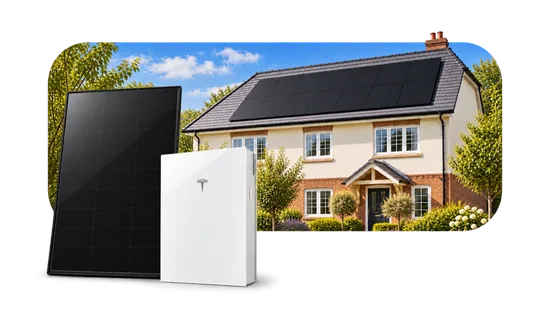
A battery can increase self-consumption and enable tariff shifting, but it also adds cost and conversion losses. Assess solar-only and solar-plus-battery options separately before deciding.
Questions to ask before buying
- What annual generation is forecast and how was shading assessed?
- What proportion of generation is assumed to be used in the home?
- Which costs and exclusions are included?
- What warranties apply to panels, inverter and workmanship?
- What happens if actual performance differs from the estimate?
- Is the installer appropriately certified for the work and export process?
EXPERT VIEW
“Payback should be treated as a property-specific calculation, not a national promise. A credible assessment uses the roof, expected generation, household consumption and current tariffs, while allowing for equipment life and future changes in demand.”
Ian Cartledge, Head of Net Zero
Frequently asked questions
Do solar panels work on cloudy days?
Yes. Output is lower than in strong sunlight, but photovoltaic panels generate electricity from daylight.
Do I need a south-facing roof?
No. South-facing roofs often maximise annual output, but east- and west-facing arrays can still perform well and may spread generation across the day.
Will solar panels eliminate my electricity bill?
Usually not. Most homes still import electricity when generation is low or demand is high, and standing charges generally remain.
Does a battery always shorten payback?
No. A battery may improve self-consumption, but whether it improves overall payback depends on its cost, cycling, efficiency, tariffs and lifespan.
Get a property-specific solar forecast
Eco Providers can assess your roof, electricity use and future energy plans, then provide a clear system proposal and generation estimate.
Official sources
- Energy Saving Trust: solar-panel costs, savings and benefits
- Ofgem: Smart Export Guarantee supplier list
- GOV.UK: VAT on energy-saving products
Important information
Savings and payback depend on the property, energy use, equipment, tariffs and future prices. This guide is general information and not financial advice.