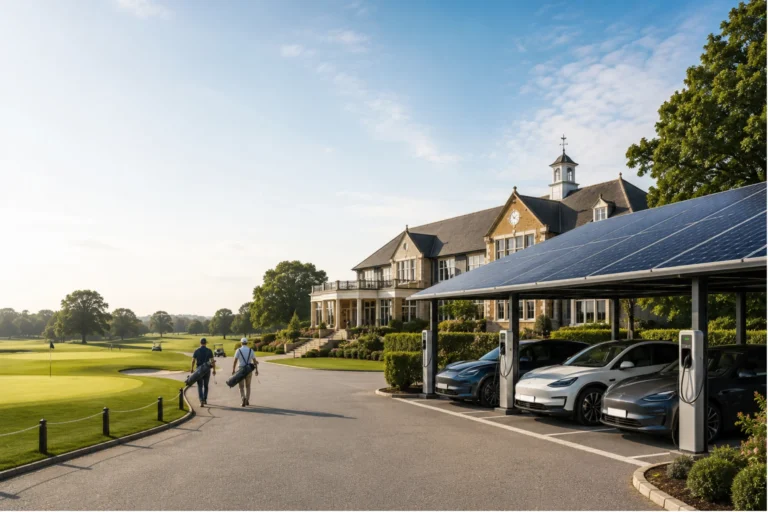



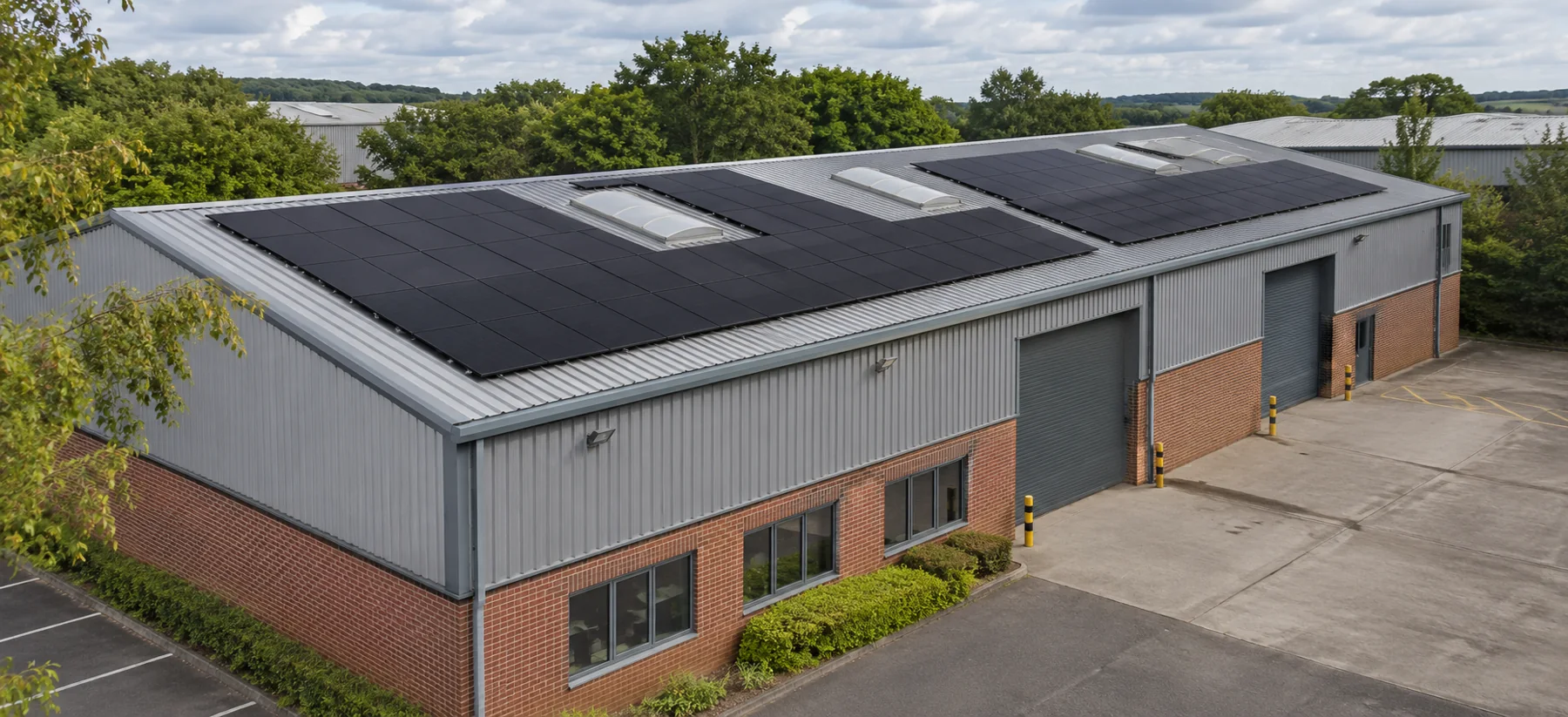
AI-generated illustrative image: rooftop solar panels on a commercial building. It does not depict a real Eco Providers customer or property.
A large roof is an opportunity, not a business case. The more useful question is how a solar project will support the way a building earns its keep - today and over the investment period.
For an owner, occupier or finance director, the decision is not simply how many panels will fit. It is whether the project delivers credible value under realistic operating conditions, with clear responsibility for the building, the energy and the asset after installation.
This guide sets out a decision framework for commercial rooftop solar. It is written for early-stage planning, not as a site-specific design or financial recommendation. For an overview of our service, explore commercial solar for your business.
Last reviewed: 12 November 2026.
The business case at a glance
- Use interval consumption data, not only annual electricity spend.
- Resolve roof, tenure and connection constraints before fixing the design.
- Compare options on the same operating and price assumptions.
- Separate modelled savings from verified performance.
- Give aftercare, monitoring and social-value commitments named owners.
Start with demand, not roof capacity
Two businesses can use the same amount of electricity each year and have very different solar opportunities. A daytime production facility, a weekend venue and an evening-led operation do not use energy at the same time.
Ask for available half-hourly or other interval consumption data covering at least a representative year. Match it to opening hours, shutdowns and seasonal changes. Record planned electrification, additional shifts or a possible tenant change separately from existing demand. An aspiration is not an agreed operating forecast.
SEAI’s business solar guide explains why the timing of consumption matters when designing for on-site use. Its technical principles are useful here; its Irish policy and connection context should not be applied to a UK site.
The investment paper should distinguish electricity consumed on site from electricity exported. Do not value both at the imported electricity rate. Equally, do not assume every line on an electricity bill disappears when grid consumption falls.
Treat the building as part of the investment
A project can look attractive on an energy model and still be poorly timed for the property. Installing before a roof refurbishment, lease event or major change of use can create avoidable cost.
Before requesting a final quotation, establish:
- Roof readiness: condition, remaining life, structural assessment, shading, access and any relevant hazardous-material surveys.
- Ownership and permission: who controls the roof, who pays the electricity bill and who can authorise work.
- Electrical constraints: supply capacity, connection requirements, cable routes and space for equipment.
- Operational constraints: access, shutdown windows, deliveries, fire-safety considerations and insurer requirements.
- Future use: planned extensions, tenant turnover or changes to production.
For projects in Great Britain, establish the applicable distribution-network connection route early. National Grid Electricity Distribution’s G99 guidance explains its process for relevant generation and storage installations. Confirm the requirements with the network operator serving the actual site; a proposed export limit is not a substitute for checking connection obligations.
Compare investment options on equal terms
Do not compare one supplier’s optimistic forecast with another’s cautious one. Give bidders a common data pack and require them to show their assumptions. The board should be able to explain why its preferred option wins, not simply which quotation has the shortest payback headline.
On a smaller screen, swipe the comparison table horizontally.
| Option | Question to answer | Evidence to request |
|---|---|---|
| Efficiency first | Will reducing avoidable demand change the solar design? | Measured baseline and a forecast after agreed efficiency improvements. |
| Solar only | How much generation can the operation use directly? | Interval-based consumption and generation model, with export separated. |
| Solar with storage | What additional problem does the battery solve? | Incremental cost and benefit, usable capacity, losses, limits and replacement assumptions. |
| Staged investment | Is it sensible to align installation with another property event? | A sequence tied to roof works, lease decisions or confirmed new electrical demand. |
Storage should earn its place in the proposal. Ask whether its purpose is shifting solar generation, managing a particular tariff or reducing defined peaks. Backup power is a separate design requirement; it should never be inferred merely because a battery appears in the quotation.
Stress-test the proposal before approval
A credible proposal contains a base case and a downside case. Ask what happens if daytime demand falls, electricity prices change, export income is lower than assumed or the project starts later than planned.
Look beyond simple payback. Request a whole-life cash-flow view that identifies maintenance, monitoring, insurance implications, finance costs where relevant, expected replacement allowances and any end-of-term obligations. Have the organisation’s finance adviser assess tax and accounting treatment rather than accepting generic claims.
Keep the calculation transparent: modelled avoided import cost plus modelled export revenue, less relevant operating and financing costs. Explain which costs remain. If benefits depend on a tariff or export arrangement, identify the term and renewal risk.
Ask the proposer to show both the result and its dependencies. A forecast that only works with an unconfirmed operational change is a conditional opportunity, not an approved investment case.
Agree who owns performance after installation
Procurement should cover the operating asset, not just equipment delivery. Specify what handover includes: drawings, commissioning records, warranties, operating instructions, monitoring access and an escalation route.
Give someone in the organisation responsibility for reviewing performance. Agree how exceptions will be detected, who investigates them and what reporting is supplied. A monitoring dashboard has limited value if nobody acts on it.
Review generation, on-site use, export and availability separately. Compare actual results with the agreed model while accounting for weather and changes in building use. Keep estimated carbon outcomes distinct from measured energy data, and document the methodology used for any environmental claim.
Make social value specific enough to verify
Lower operating costs are a commercial benefit. They do not automatically demonstrate a wider community benefit. If social value matters to the organisation, define it deliberately during procurement rather than adding a paragraph after completion.
Possible commitments include supervised training opportunities, accessible careers sessions or a funded community activity linked to the project. These are proposed actions, not claims about work Eco Providers has already delivered.
- Define the outcome: who should benefit and what should change?
- Set a baseline: what would happen without this project?
- Assign delivery: name the owner, budget, partner and deadline.
- Retain evidence: attendance, completion records or beneficiary feedback, with appropriate permissions.
- Report honestly: distinguish commitments, completed activities and demonstrated outcomes; avoid double-counting.
A view from Eco Providers
“The strongest commercial solar business case starts with how the building operates, not how many panels fit on the roof. Understand when the business uses electricity, test the assumptions behind the savings and plan for the full life of the system. That gives decision-makers a clear view of the value, the risks and who is accountable after installation.”
Graham Bailie
Head of Commercial, Eco Providers
Seven questions before the board says yes
- Have we used representative consumption data and separated confirmed changes from aspirations?
- Are the roof, tenure, permissions and connection route sufficiently understood?
- Are competing proposals using comparable assumptions and scope?
- Does the downside case remain acceptable?
- Are exclusions, ongoing costs and end-of-term responsibilities explicit?
- Who owns monitoring, maintenance and performance reporting?
- Which social-value commitments are funded, deliverable and evidenced?
Frequently asked questions
Is the largest possible array the best choice?
Not necessarily. Usable space is only one consideration. Demand timing, connection constraints, future changes and the economics of export also affect the decision.
Should every commercial solar project include a battery?
No. Assess the additional benefit against its additional cost and operational requirements. Solar-only and solar-plus-storage proposals should be compared explicitly.
Can a tenant progress a solar project?
A tenant can explore options, but roof rights, landlord approval, lease duration and responsibility for the asset need early clarification with the relevant property and legal advisers.
What information should we gather for an initial assessment?
Start with the site address, recent electricity bills, available interval consumption data and normal operating hours. Add roof drawings or surveys, ownership or lease details, planned changes in demand and any known access restrictions. Flag gaps in the information so assumptions can be recorded rather than mistaken for confirmed facts.
Can savings be guaranteed from an initial quotation?
A forecast is not a guarantee. Any contractual performance commitment should state exactly what is covered, how it is measured and which exclusions apply.
Start with your building and energy data
Share your site address, recent electricity bills, operating hours and future plans. Our commercial team can discuss a proportionate initial assessment and the information needed to move forward.
Sources and further reading
- SEAI: Solar PV for Business - Best Practice Guide (technical guidance; Irish policy context).
- National Grid Electricity Distribution: G99 connection procedures.
- Eco Providers Commercial: solar panels for commercial buildings.
Sources checked 12 November 2026. This article provides general planning information, not engineering, legal, tax or investment advice. Site suitability, permissions, costs and performance require project-specific assessment. No fixed savings, payback or funding entitlement is promised.